Modern Cladding Solutions That Make Your Building Look Clean and Last Longer
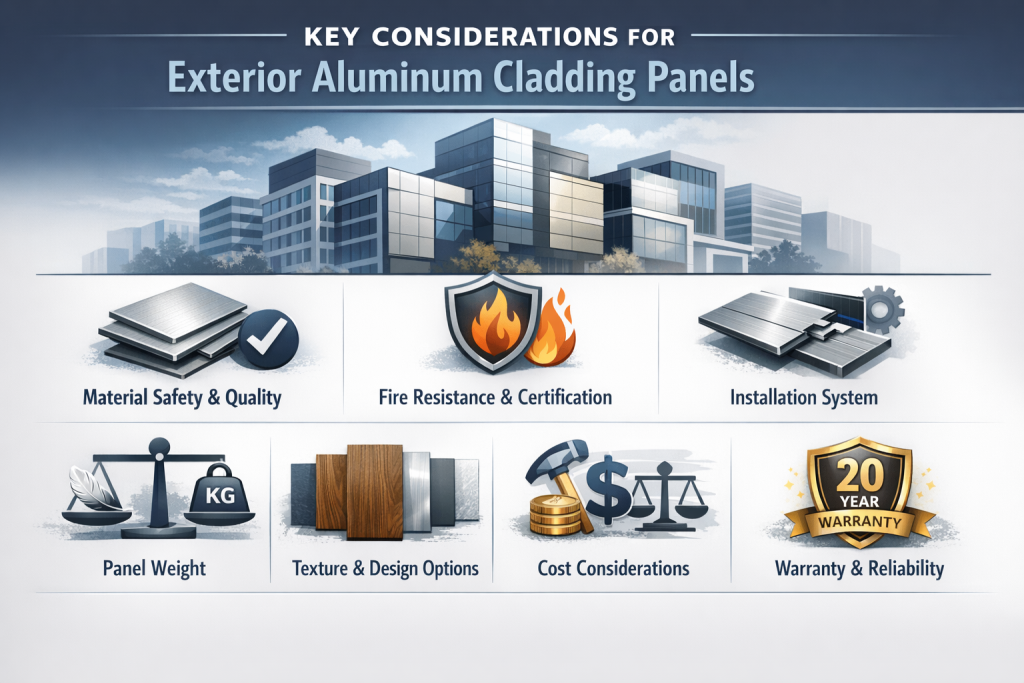
Aluminum Cladding vs Other Cladding Materials: What You Need to Know

If you don’t want to waste your budget, prevent delays in your timeline, and avoid being stuck with maintenance problems, you have to choose the right material first. What looks good on a sample board can behave very differently once it’s installed on a wall; especially in real U.S. weather conditions.
Today, many architects, homeowners, and commercial project managers want the warm look of wood, but without the constant repainting, swelling, cracking, and termite issues. That’s exactly why wood look aluminum cladding panels have become so popular across the USA.
But here’s the problem:
Not all wood-look aluminum panels are the same.
Today, you’ll learn how to choose the right product, what factors actually matter, and how to avoid mistakes that can cost you time, money, and peace of mind—whether your project is residential or commercial.
Step 1: Understand Where the Panels Will Be Used (Residential vs Commercial)
Before choosing anything, you must be clear about how and where the panels will be used.
For Residential Projects
Homeowners usually care about:
- Visual warmth and natural wood texture
- Low maintenance
- Easy installation
- Long-term durability without repainting
Aluminum cladding might be used for:
- Facades
- Fencing
- Ceilings
- BBQ areas
- Feature walls and more
For Commercial Projects
Commercial projects demand more:
- Consistent quality across large surfaces
- Fire resistance
- Weather durability
- Faster installation to reduce labor costs
- Long-term performance without frequent repairs
If a product cannot handle both visual and technical demands, it’s not suitable for professional use.
Step 2: Check the Wood Texture
This is one of the biggest mistakes people make.
Many products claim to be “wood look,” but when you stand close, the texture looks flat, printed, or artificial. Real wood has depth, grain variation, and natural movement.
High-quality wood-look aluminum panels should:
- Have realistic grain depth
- Offer multiple wood textures, not just one pattern
- Match modern and traditional designs
- Look natural in both sunlight and shade
This factor alone decides whether your project looks premium or cheap.
Step 3: Aluminum Alloy Quality Matters More Than You Think
Not all aluminum is the same.
Low-grade aluminum can:
- Dent easily
- Lose shape over time
- Fail under temperature changes
For both residential and commercial use, you should look for:
- Strong yet lightweight aluminum alloy
- Flexibility that bends but does not break
- Resistance to corrosion and rust
This solves major issues like cracking, warping, and early replacement—especially important for aluminum panels in U.S. climates.
Step 4: Installation Factor
Even the best panel becomes a problem if installation is complicated.
Traditional systems often require:
- Welding
- Surface preparation
- Skilled labor only
- More time and higher cost
Modern easy to install wood look aluminum cladding in USA should:
- Require no welding
- Allow cutting, clicking, and fixing on-site
- Reduce labor time
- Work for contractors, designers, and even DIY users
Smart installation systems change everything.
Step 5: Maintenance Reality
Wood looks great—until it doesn’t.
Real wood needs:
- Repainting
- Sealing
- Pest control
- Constant care
High-quality wood look aluminum cladding panels remove all of this:
- No repainting
- No termites
- No swelling or rust
- Easy cleaning
- Long lifespan
With that said, aluminum cladding is becoming the preferred solution for long-term projects.
Do All These Factors Exist in One Solution?
Many people struggle at this point. They find good texture but bad installation. Or easy installation but poor durability.
So the question becomes: Is there a system that checks all boxes?
This is where GTO Aluminum comes in.
Why GTO Aluminum Fits These Requirements
GTO Aluminum focuses on solving real project problems, not just selling panels.
Installation Systems That Actually Save Time and Labor Costs
GTO offers Click Systems and Universal Systems, designed after decades of engineering:
Click System: Snap-on installation with clean, aesthetic gaps
Universal System: Slide-on, tongue-and-groove for fully enclosed, waterproof applications
No welding. No surface prep. Cut, click, and done.
Want to See How Easy Installation Really Is?
If you want to see how the click and universal systems work in real life, you can watch installation video guides and see the process step by step.
This works perfectly for project managers, contractors, and distributors handling multiple clients.
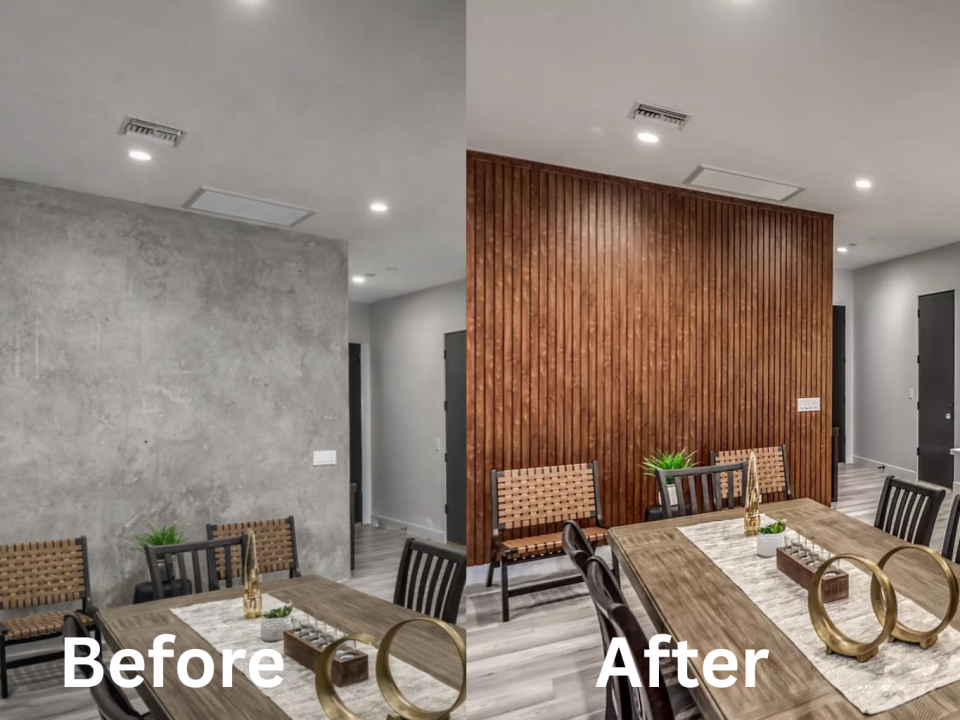
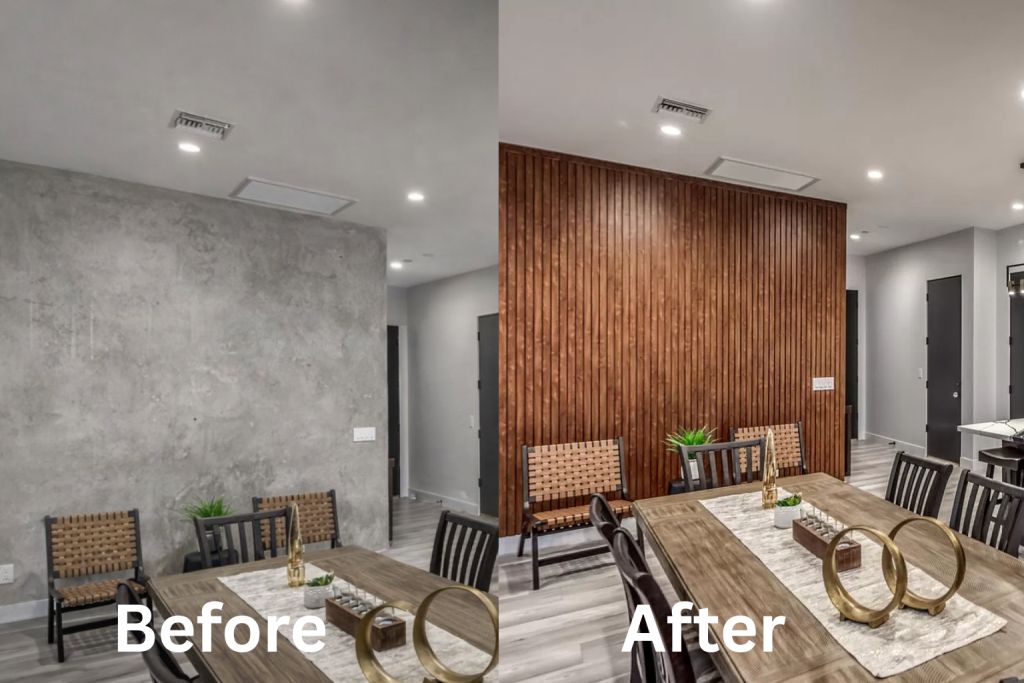
Before & After installation of GTO’s Wood-Look Aluminum Panels
After installing wood look aluminum cladding panels, the transformation is clear:
- The warmth of wood remains
- The strength of aluminum takes over
- No repainting
- Minimal to no maintenance stress
The structure looks modern, premium, and future-ready.
Custom Textures & Colors
Some projects need something special.
GTO Aluminum supports customized textures and colors, allowing designers and architects to match:
- Brand identity
- Architectural themes
- Unique project visions
You don’t adjust your design to the product—the product adjusts to your project.
Samples Before Decisions
One thing professionals appreciate is transparency.
Before finalizing, sample boxes are provided so you can:
- See the texture
- Feel the material
- Match it with your project
This removes uncertainty and regret.
Conclusion
Choosing wood look aluminum cladding panels is not just about design. It’s about avoiding future problems before they happen.
When texture, alloy quality, installation system, and customization come together, the result is a solution that works for both residential and commercial projects across the USA.
And when those boxes are checked correctly, the decision becomes simple.
FAQs:
1. What if it looks good now but disappoints me after installation?
This fear is valid. Many people have been burned before. That’s why texture depth, samples, and system design matter. Seeing and feeling the material before installation removes this risk completely.
2. Is aluminum really better than wood for my home?
If you love maintenance, wood is fine. If you want the same beauty without stress, aluminum is the smarter choice. It keeps the look and removes the problems.
3. Will this actually save me money long term?
Yes—and this is where most people change their mind. No repainting, no repairs, no pest damage, and faster installation mean real savings over time.